Catch The Next One.
Stay tuned for our next blog focused around how AI impacts account services.
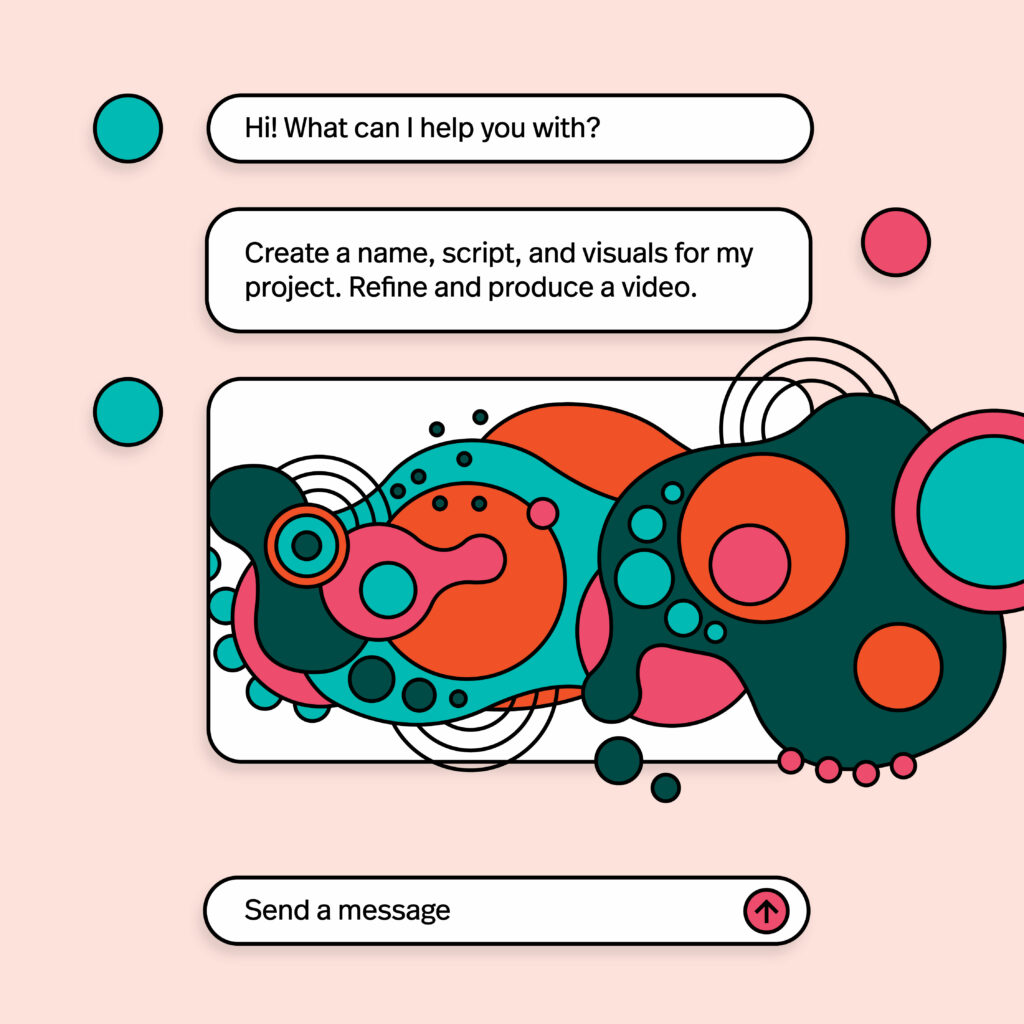
With an unflappable, sickly-sweet cheer, it backpedals with an apology and tries, tries again. If it were a human, I’d be a bully. And I’d be OK with that.
When robots take over the world, I’ll be the first to be hunted down. But I’ll roast them like a Comedy Central dais as they spit-roast me. It’ll be a mutual raking over the coals.
I do know one thing. AI will not be taking my job. It bites at creativity. My number one rule for any project is: “Would I actually give a damn about this?”
That’s the main crux of advertising. People actively do not want to interact with ads. To get them to pay attention is a small feat we reach for every day. To get them to smile and to feel something real is a minor miracle. Or just good creativity.
But AI does have its upsides. Ok… like three that I’ve counted.
My reading comprehension is hilariously bad. But put a brief, an interview, or a pile of notes into ChatGPT, and it will tell you what to take away.
I usually feed a brief into LLM algorithms to consolidate, then give it a bunch of my thoughts. I ask, “What am I missing?” It can help fill in the gaps.
Photoshop has a content-aware fill that’s super helpful for extending photos. Say I have a horizontal photo for a digital ad and need a vertical one. I can extend the top and the bottom of it to make it fit in a vertical space better, or vice versa. I remember doing this manually using the clone tool, but the end product often consists of artifacts and visual glitches. Now this happens in a flash. It saves a ton of time.
For video, there’s an AI feature (that I’ve never actually used) that basically does the same thing. It extends a clip a second or two longer before or after a shot. Possibly useful, and I’m keeping it in my back pocket.
AI is sometimes OK at concepting visuals from scratch, but often they’re laughable. It’s too literal and specific in a too non-specific, impersonal way. However, it can be good for concept placeholders, especially to sell an idea that you’ll execute to a higher level using a team of creatives and producers.
AI tools can be better at audio effects like reducing an echo or eliminating background static noise. At the same time, it can also deteriorate the quality and make the voice sound a little hollow. It’s a balance.
AI sometimes stands in for an actual human voice in the edit process while we’re waiting for a VO talent to deliver. I give it an idea of what kind of voice and tone we’ll end up wanting, and it generates a temporary voiceover that I can drop in and use as a timing guide while editing until we record the final VO.
I also use AI for high-level concept ideas or initial scripts. They are universally terrible. Generic, cliché, expected, and uninteresting. Some creatives say you need to get through 50+ ideas before you start dredging up some usable gold. ChatGPT does the boring digging for you. You immediately see why ideas are bad. That’s why they’re good. Then you know not to do that. Go the other way, instead.
But once you reach your limit, step away from the AI slop. Creatives naturally challenge and push every idea. We have a high bar for weirdness. Follow that impulse, and you’ll finally get to something you can work with.
AI can’t think creatively in a way that breaks the rules. It can only play it safe because it pulls from what already exists. Everything it does fits into a mold. Creative is good when it’s a little weird. When it steps outside the box. When it challenges normal ideas.

One diehard rule to live by: AI is not for the final product. It should never be the final deliverable or final execution. That is how you make a brand no one wants to look at (or trust) in any medium.
AI can pull from the internet, but it can’t be out in the world. It’s not on the street, seeing, hearing, getting influenced, feeling things. It’s our day-to-day life that shapes our creativity. Our interpersonal relationships, conversations, and lived experiences inspire us to be creative and artistic. They drive us to make things in ways AI never could.
Sure, AI may continuously add more functionality, but it also seems to be getting things wrong all the time. No matter what, we’ll still be over here, being real humans making badass creative that edges up the needle for our clients. Knowing when and how to use AI is important, but it’s even more important to know when not to use AI. Let your humanity, empathy, and emotion drive your creativity.
Learn more about Stoltz’ views on AI.
Stay tuned for our next blog focused around how AI impacts account services.