One Year In: A Conversation with Cam Fast, Graphic Designer at Stoltz
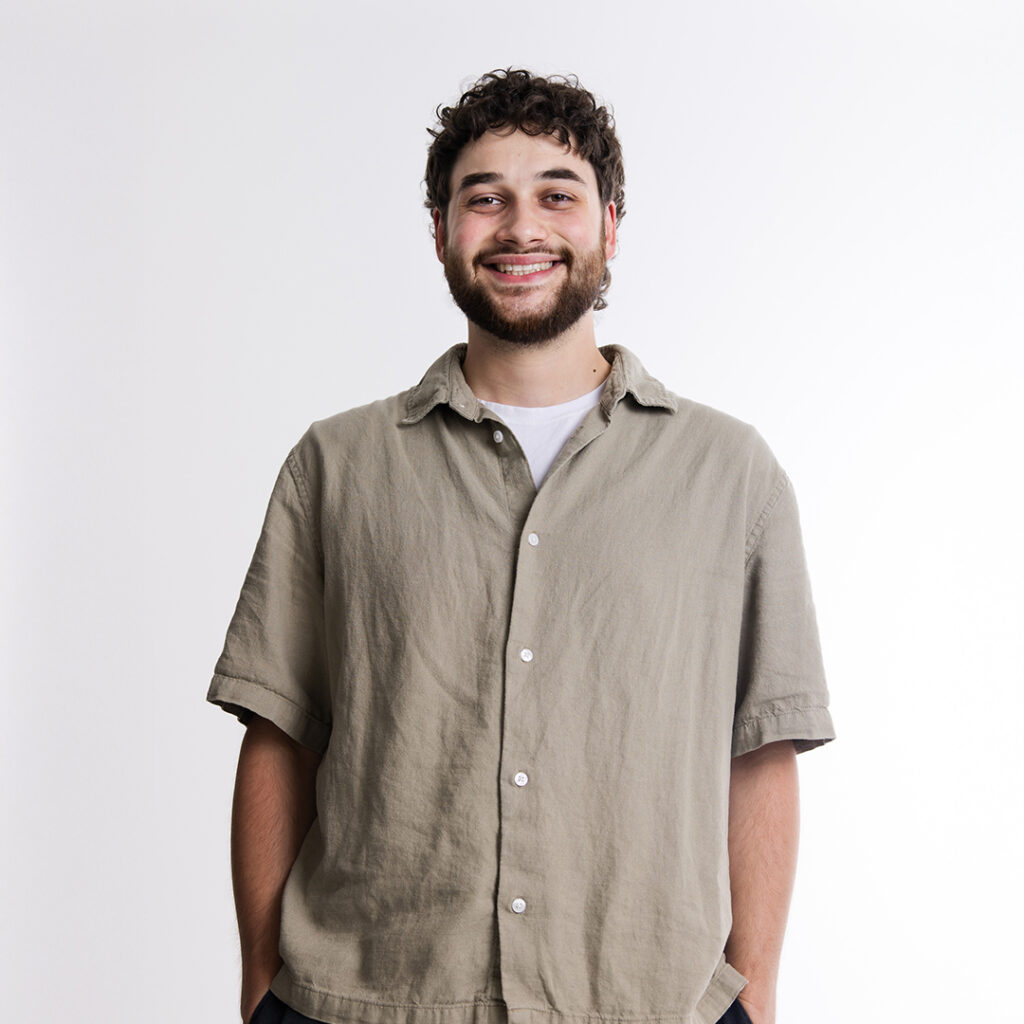
Cam Fast
Graphic Designer
Fresh graduate and 2026 Stoltz summer creative intern Emma Corbus sat down with one-year veteran Cam Fast to get the real story on life after art school — straight from someone who was in her shoes just a year ago.
Emma: So you’re a graphic designer at Stoltz, what does that entail? What kind of work do you do?
Cam: Yeah, I’m a graphic designer, but we all blur the lines on titles here. I also do video, audio, and sound design. I’ve screen printed for Stoltz, and I’ve art directed projects. It all blends together. But yeah, mainly graphic design.
Emma: What’s something you’ve learned in your first year at Stoltz that you didn’t necessarily learn in school (NNU)?
Cam: One of the biggest things I’ve learned has been how important the idea is compared to the execution. Don’t get me wrong, the execution is very important too. But without a strong idea behind it, it doesn’t matter how good it looks. It’s not that my schooling didn’t teach me this, but it’s different when you get into the workforce. You realize how important the strategy is, and all the seemingly behind-the-scenes work before you even start on the visuals. That’s been a big thing I’ve been learning — focusing on creating as many ideas and concepts as I can and then narrowing them down from there. I’d say that’s one of the biggest things.
Emma: What’s something that you did while you were at NNU, or something you learned in school that has helped you feel prepared at Stoltz?
Cam: The class in school that prepared me the best for this role was Graphic Design 3. The assignments were much more specific than those in previous classes. We had a prompt, a challenge, and we had to find a solution. It got into the nitty-gritty with teacher reviews, peer reviews, and presenting in front of the class. It felt different from earlier classes because those were more general, more broad. Design 3 felt like we had a goal to accomplish. We had a brief, preliminary check-ins, and we had to show all our work and the thought process behind it, which is exactly what I do now at work. Those more advanced design classes solidified my understanding of how it works in the real world.
Emma: What is your favorite project you’ve worked on in your first year at Stoltz?
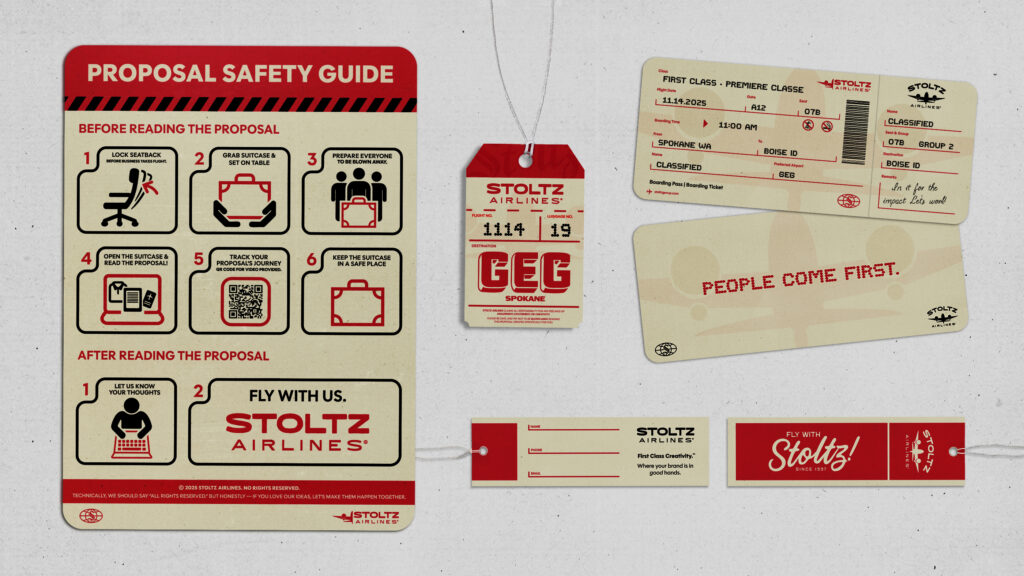
Cam: One of them is definitely the Spokane Airport RFP. It’s not a client project, but my favorite project in general is definitely that one. I pitched an idea at one of our Kitchen Kollabs, these brainstorm sessions we have in the office kitchen, and the team really ran with it. Everyone contributed, and it developed into something way bigger than the initial concept. From there, I ran with it, handling the majority of the design, the case study, and the video. Visually, I could craft what I wanted: print material, a video, and original music for that video. I got to use all areas of my skill set, which was really cool. And it led to a pitch meeting with their team and ultimately winning the account. It also won silver at the 2026 Rockies Awards, so I have to throw that in there. An honorable mention project, though, would be the Boise School District Good Neighbors campaign. It was my first time filling in as art director for a month or so, and the team did some really great work.
Emma: What’s something you didn’t expect to learn or experience in your first year working at an agency?
Cam: Honestly, I didn’t expect to dive as deep into video production as I have. Mostly because of my title — I knew there was some room to work in other areas, but I’ve been able to do it way more than I anticipated, especially in video. Working alongside our producer, I’ve been able to hop on projects with them, take some on solo, and learn a ton. I even picked up a whole new editing program along the way. I’ve already grown a lot in that area since I started, and honestly, way more than I expected to in my first year.
“As long as you’re willing to learn, it’ll take you a long way.”
Emma: What is your favorite medium or avenue of creativity? And what inspires you?
Cam: Right now, one of my favorite mediums is sound design, specifically in post-production. On the Boise School District video, I had dedicated time to sound design, which was really fun. Creating something from nothing, basically. We didn’t record dedicated audio on that shoot; I did it all in post. That was something I’d been wanting to explore for a while, and I’ve since been able to do it for a couple of radio spots, too. It makes me excited just knowing I get to do sound design for a video — noticing those niche sounds you wouldn’t really recognize unless you were intentionally listening for them. Right now, that’s my favorite medium I’m working in.
As for what inspires me, it may sound cliché, but I love vintage design. There’s something about it that just sticks with me, especially vintage product and packaging design. For example, I found this cool box of pencils from Vietnam at a stationery store last week, and I was like, “This is some of the coolest packaging I’ve ever seen”, so I bought them. Just weird things like that: Zippo lighters with Snoopy etchings from the 70s, old posters, and packaging or print design. I always try to either capture photos of things when I see them out in public or purchase them and scan them, and I keep a folder of that kind of inspiration. I want to get one of those portable scanner wands too, so I can scan inspiration on the go. Eventually, I want to print these out and showcase them on a metal board for my office — a real physical inspiration wall. It’s not always directly tied to the work I’m doing, but keeping it in the subconscious is what I enjoy: products, packaging, print. The simplicity of it is just wonderful.
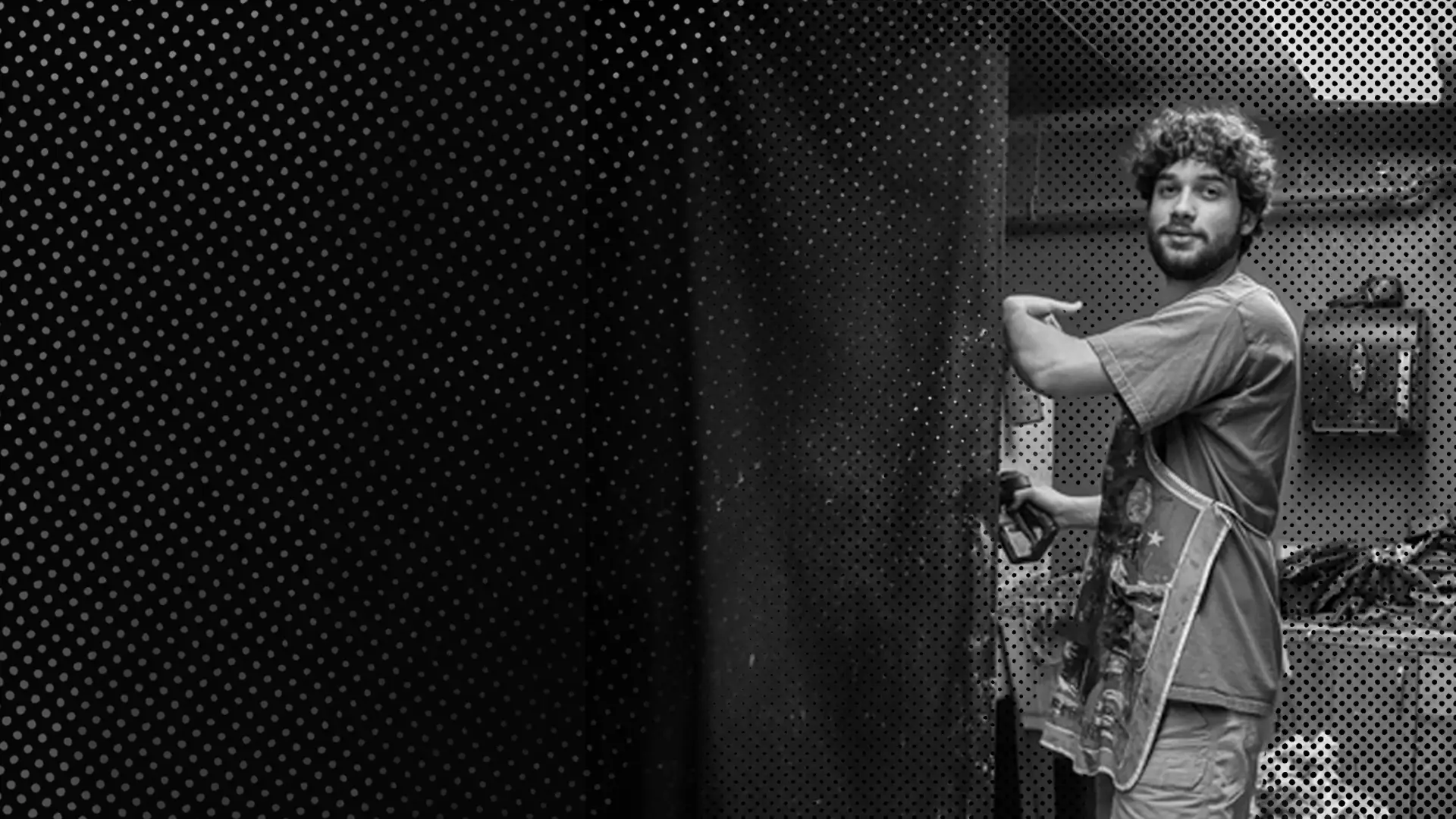
(Check out the behind the scenes video of Cam’s work with the Boise School District!)
Emma: What’s some advice you’d give Cam in his first month working at Stoltz, now that it’s been a year?
Cam: They don’t expect you to be perfect. For the first six months, I thought I was doing a terrible job and that I was going to get fired. I thought I wasn’t learning fast enough or was taking too long to assimilate into the workplace. But I would tell myself that Stoltz hired me for the skills I have right now. They hired me, knowing I just graduated from college. They don’t expect perfection, and they expect it to take time — everything will eventually be all right. And it is. It has been. I wouldn’t say the first few months were stressful, but there was definitely that uncertainty of not knowing where things were going. I feel like that’s normal for a first job in the advertising or creative space, and I know many creatives feel that way. As long as you’re willing to learn, it’ll take you a long way. That’s the advice I would give myself or others in a similar spot.